
How HPLC Testing Measures Botanical Strength
HPLC testing answers one of the biggest questions in botanicals: how strong is this ingredient, really? Two batches of the same herb can appear identical to the naked eye, yet their active compounds may differ quite a bit. Harvest timing, growing conditions, storage, and processing can all play a part.
For supplement brands and ingredient suppliers, that difference shapes label claims, customer trust, and compliance. We believe great products deserve great data behind them. Let's walk through how this technique works and what your results actually mean.
What Is HPLC, and Why Do Labs Rely on It?
High-performance liquid chromatography, or HPLC, separates a mixture into its individual chemical components so labs can detect and measure each target compound on its own. A single plant extract can hold hundreds of compounds. Strength testing needs to isolate and measure the handful that matter most.
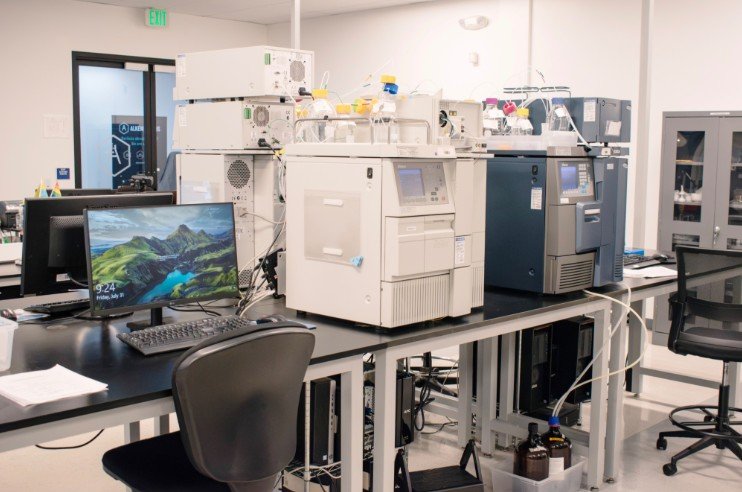
Labs trust this technique because it handles a wide range of plant constituents. It works beautifully for flavonoids, alkaloids, ginsenosides, and curcuminoids for instance. It also measures compounds that break down under heat, which rules out some other approaches. That versatility makes it a true workhorse for botanical potency testing.
Its close cousin, ultra-performance liquid chromatography (UPLC), uses smaller particles and higher pressure for faster runs. Both rest on the same core principles, so the concepts here apply to either one. The choice usually comes down to the compound, the matrix, and instrument availability.
How the Separation Process Works
Every potency test follows a similar path inside the instrument. Here's a simplified look at what happens to your sample during an HPLC run. Each step builds on the one before it, so care at the start pays off at the end:
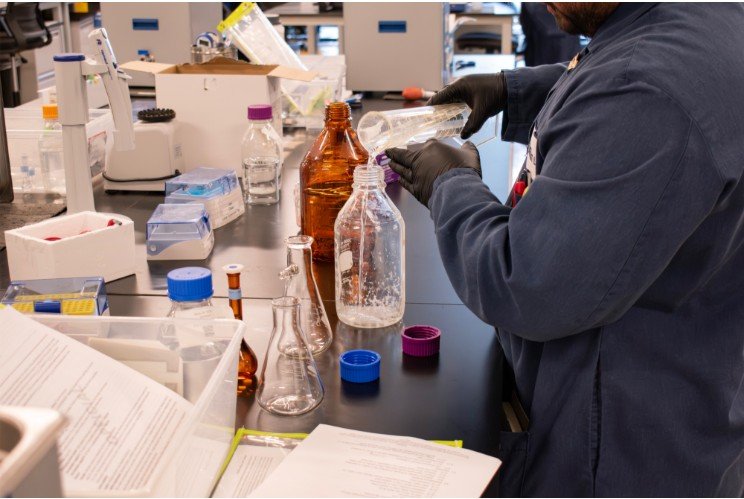
- Sample preparation: Our analysts grind, weigh, and extract and/or disolve the material into a liquid solution.
- Injection: The instrument draws a precise volume of that extract into the system.
- Separation: A high-pressure pump pushes the sample through a packed column, where each compound travels at its own speed and separates from the others.
- Detection: A detector reads each compound as it exits, often by measuring UV light absorbance.
- Chromatogram: Software plots those signals as peaks on a graph for our team to review.
Each peak represents a different compound. Its timing helps reveal what the compound is, while the area under the curve shows how much is present. Together, those two details form the backbone of every potency result we report. When peaks overlap or shift, our analysts investigate before anything goes on a report.
Turning Peaks Into Potency Numbers
A peak on its own doesn't tell the full story. Analysts compare it against a reference standard, a highly pure sample of the target compound at a known concentration. They run that standard at several levels to build a calibration curve. Your sample's peak then lands on the curve, which converts its signal into a precise amount.
Results usually appear as a percentage or as milligrams per gram. Some botanicals rely on a single marker compound, while others call for a full panel of related constituents. For example, a turmeric extract might report total curcuminoids at 95 percent. That figure tells you whether the material meets its specification. It also confirms whether your finished product delivers what the label promises.
Why HPLC Matters for Label Claims and Compliance
Supplement brands carry real responsibility for what their labels say. The FDA's dietary supplement manufacturing rules require companies to confirm identity, purity, strength, and composition. Quantitative data from HPLC gives you documented proof of strength. It turns a label claim into something you can actually stand behind.
Accurate numbers protect you in the marketplace, too. Retailers, auditors, and online platforms increasingly ask for supporting test results. When someone questions a claim, solid chromatography data lets you answer with confidence instead of guesswork. It also helps you catch non-conforming lots before they ever ship.
Consistent potency data also supports smarter business decisions. It helps you compare suppliers on facts rather than promises. It shows whether a price premium actually buys you the ingredient you wanted. Over time, those records build a clear quality history for each material you source.
What Makes an HPLC Method Scientifically Valid
Not every chromatography method delivers trustworthy results. FDA’s cGMP rules require manufacturers to use scientifically valid methods. Each method also needs to be fit for purpose, meaning it suits the specific botanical, matrix, and compound being measured. Validation is how a lab demonstrates both. It checks accuracy, precision, specificity, and linearity, and confirms the method measures the right compound at the right level, reliably. Even the best HPLC instrument can’t make up for a poorly designed method.
Federal researchers recognize this challenge as well. The NIH Office of Dietary Supplements runs an analytical methods and reference materials program to strengthen how labs characterize supplements. Its work highlights how complex botanical mixtures can make accurate measurement tricky. Plant matrices often contain look-alike compounds that overlap on a chromatogram. Good method development separates those neighbors so each peak tells an honest story.
Independent oversight adds another layer of confidence. ISO/IEC 17025 accreditation means an outside body has reviewed a lab's technical competence. When you compare labs, ask about accreditation, method validation, and how openly they share their approach.
Bringing Clarity to Every Batch
Under 21 CFR Part 111, strength testing belongs inside your quality system, not as a one-time check. The rule requires specifications for each component and finished batch, along with documented proof that each one meets them. Testing raw materials at receipt, then again in finished goods, helps you spot drift early. Pairing HPLC results with identity testing also confirms that the right plant delivers the right compounds.
It also helps to talk with your lab before you submit samples. Share your label claims, target compounds, and any past results you have. That context lets analysts choose the right method from the start.
Here at Alkemist Labs, we've tested herbs and fungi since 1997, and a clean chromatogram still makes our day. We share our methods openly, so you always know how we reached your numbers. If you'd like help building a testing plan for a specific botanical, our team would love to hear from you. Connect with the Alkemist team, and let's dig into your data together.